Ingólfur Arnarsson: ...just a shell.
-
-
Explore all of the Iterations
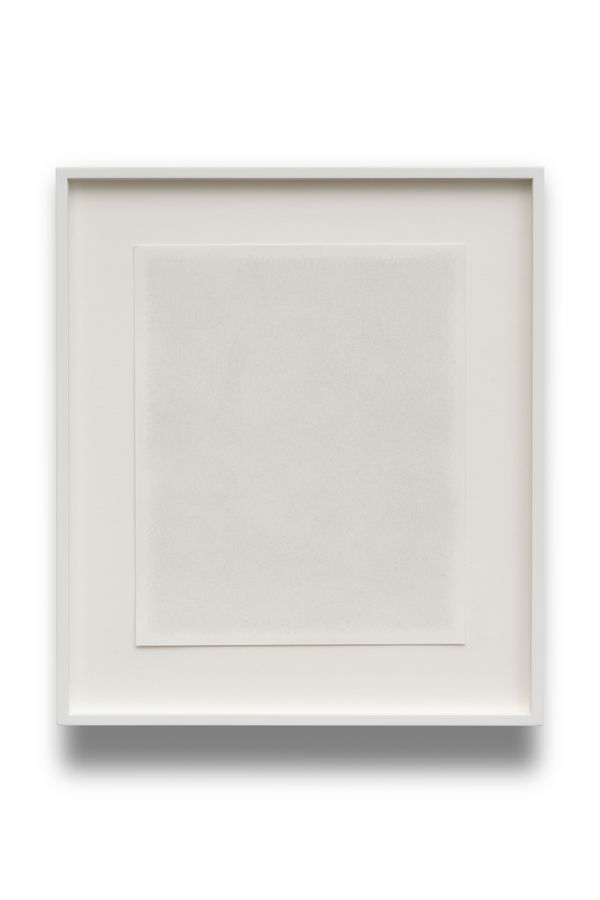
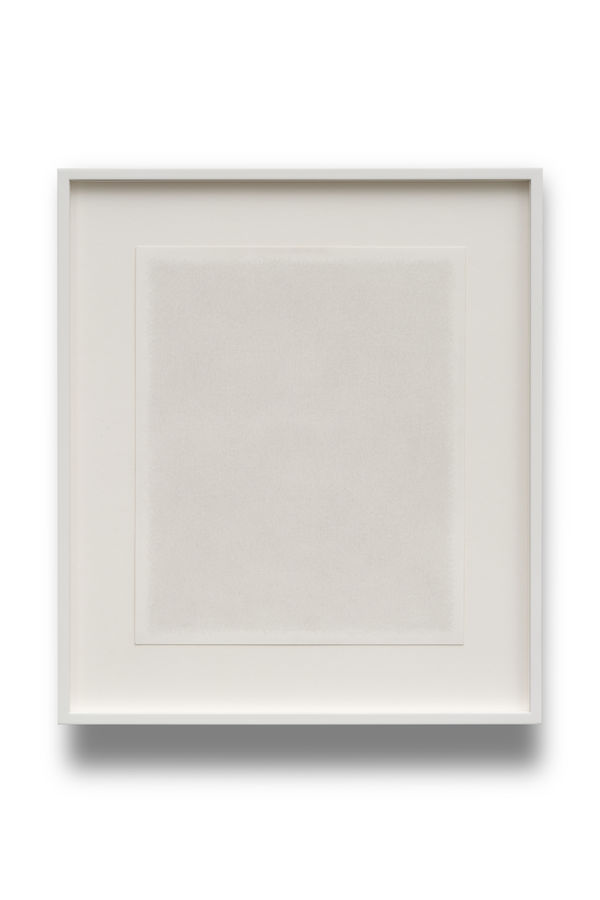
… just a shell. is a year-long exhibition by Ingólfur Arnarsson at i8 Grandi. Throughout the year, the artist will make architectural modifications to the exhibition space through additions and alterations, while the inclusion of a set of drawings serves as a constant in each transformation. Arnarsson’s drawings are built up through layered crosshatching of hard-leaded pencil lines, creating a field of subtle irregularities. Continuously evolving with the addition of new works and interventions, each iteration will be accompanied by a new text by Lani Yamamoto.
-
The horizon is a line. Between earth and sky. What we know and don’t. As far as we can see.
It isn’t real (what line is?) – but real enough to set a bearing by. If at sea. In the dark. Under a single star.
It isn’t there – yet there it is. At a distance. Truest from the shore. Calculable. But assuming a sightline tangent to earth, and holding the earth’s radius constant, we are the biggest variable in our own equation. Our position determines the horizon’s by which we determine ours. Rules bend. The horizon retreats on approach and approaches on retreat. We can’t move closer by moving closer. Along the horizontal, anyway. Along the vertical, a small downward shift changes everything. The closer our eye level is to sea level, the closer the horizon moves towards us. Standing at the water’s edge the horizon is a few kilometres away. In the water, glancing across its surface, the horizon is just within reach.
Still, the horizon can never be reached. In practice or theory. The distance equation works best in a vacuum. The real world has atmosphere. Light bends. Lines curve. Math is limited by its precision. Even with other equations adjusting for refraction factored in, the horizon is always a bit further than where it should be.
The horizon is apparent. Not always. Sometimes. Vanishing in fog. Taking the distance with it. Without it, we are lost. Between foreground and background. Earth and sky. Dead reckoning gets us only so far. Point to point. Adrift. But left to our own devices, a downward spiral can feel like steady, onward progress. With no fixed horizon, the body overcompensates and under-corrects. Mistaking internal balance for external. Disorientation for orientation. Comfort for truth. Despite unwinding directions and falling numbers, attempts at correction feel counter-intuitive. Against this false sensory horizon, it’s the world turning upside down and backwards, not us. As if we weren’t earthbound. As if we could navigate earth as if we weren’t part of it.
The horizon is elusive – and maybe that’s the point. Defined by our position and perspective at a given moment, it is only a temporary, if necessary, landmark of our former limits. Once something appears on the horizon we can imagine another horizon beyond. And every time we lose sight of the horizon we find it again from a new standpoint with a different view of the world.Lani Yamamoto
-
-
-